Fall prevention for assisted living, memory care and skilled nursing
Know who is getting up before they fall.
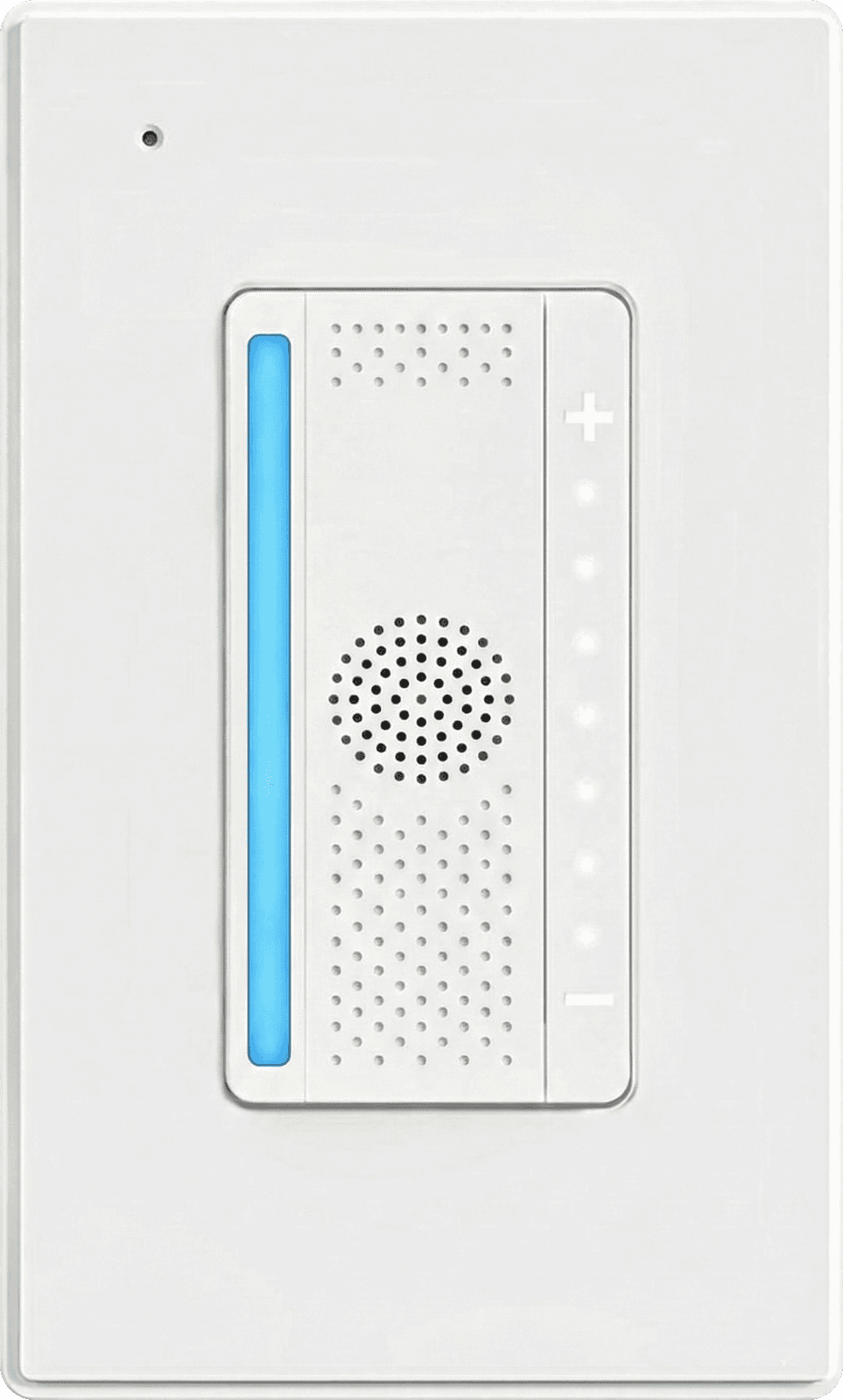
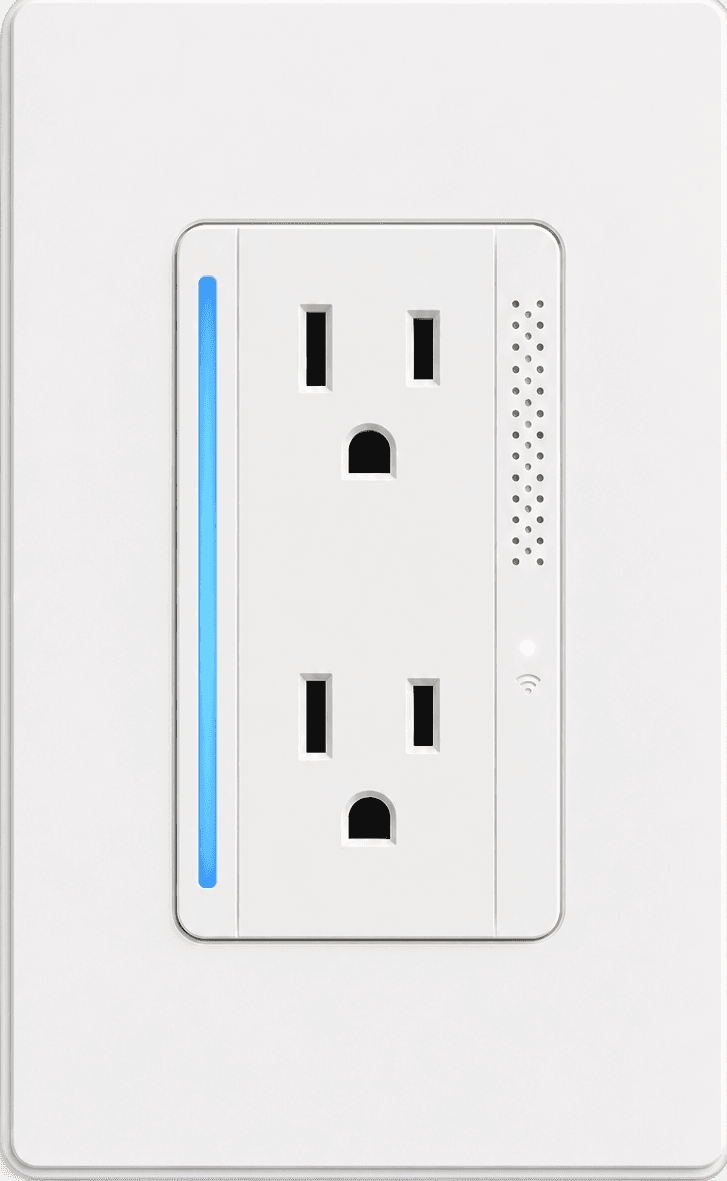
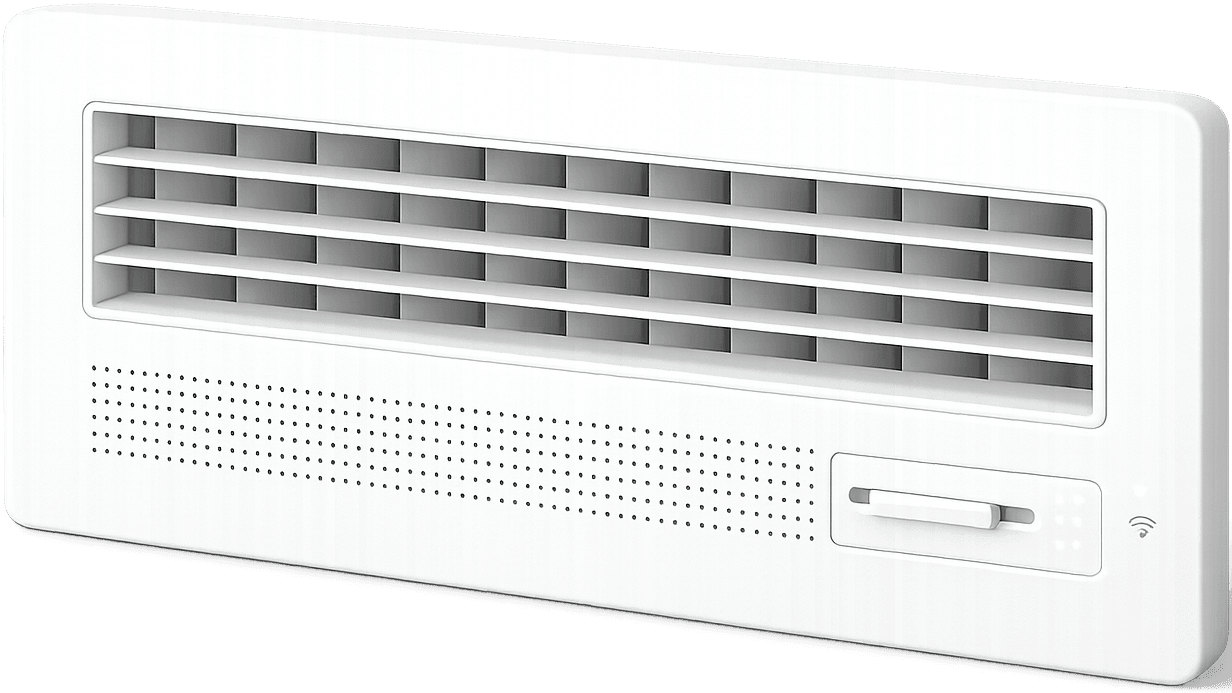
ALLIE by Arqaios builds camera-free sensing into the light switches, outlets and vents your rooms already have. Caregivers get a bed-exit alert in seconds, early signs of UTIs and gait decline, and path lighting that turns on by itself. No cameras. Nothing to wear.
LightingPath lights on to the bathroom in Apt 204.
11:42 PM
Bed exitApt 204 is sitting up at the edge of the bed. Caregiver paged.
Illustrative simulation. Rooms are monitored by radar in the wall switch, with no camera and nothing worn.
How ALLIE works
The building already has switches, outlets and vents in every room. We made them pay attention.
Fixture-native means the sensing, the intelligence and the action all live in hardware that has to be there anyway, so a retrofit is a swap, not a project.
01
Sense in the fixture
mmWave radar and environmental sensors sit inside standard switches, outlets and vents, the hardware every room already needs, with acoustic sensing as an optional feature. No hub in the room, nothing to charge, nothing pointed at anyone.
mmWave Radar
ALLIE SwitchPresence, falls, lighting and HVAC control
02
Understand at the edge
On-device AI turns raw signals into meaning in the room itself: occupied or empty, how someone is moving, whether they have fallen and, where the operator has enabled optional physiological sensing, whether breathing and motion look normal. Raw data never has to leave.
Edge AI Processor
ALLIE OutletPlug-load sensing and power management
03
Act in the building
Events flow to the people and systems that need them (caregivers, front desk, security, HVAC and lighting) with room-level location, severity and escalation timers. Comfort follows occupancy automatically.
A few residents fall again and again, mostly at night, mostly alone.
Operators tell us the same thing: two or three residents account for most of a wing's falls. If staff knew the moment those residents started to get up, most of those falls would never happen. Rounds every two hours can't do that. Pendants get taken off. Cameras don't belong in a bedroom.
Detection is the safety net. Prevention is the point. Choose a layer to see what it does.
Night bed exits, one residentIllustrative
Bed-exit alerts for the residents who fall most
ALLIE recognizes when a resident sits up and moves to the edge of the bed, and pages the assigned caregiver right away. For the two or three residents who account for most of a wing's falls, that minute of warning is the difference between a fall and a helping hand.
Alert as the resident sits up, not after they stand
Only for residents your nurses choose, so alerts stay meaningful
Room and zone in every alert, sent to the tools staff already carry
Residents with dementia can't be relied on to wear a pendant or press a button. ALLIE covers the room with nothing to wear and nothing pointed at anyone.
A month of nights in assisted living plays, and your results build below it.
Falls prevented
108
per year, 72% fewer falls
Injury costs avoided
$325,389
per year: $450,000 without ALLIE minus $124,611 with ALLIE
Premium tied to avoidable falls
–
enter your premium to see this
Bed-exit alerts
180
per month, sent to caregivers
Time on the floor
40 h
avoided per year
Falls prevented, by layer
Bed-exit alerts for repeat fallers: 83
Early UTI alerts: 6
Smart path lighting: 9
Gait-change alerts: 10
Rounds only
150 falls a year
Found in about 60 minutes on average
Up to 120 minutes between checks
Arqaios estimate, to be validated in pilots. In assisted living and memory care a few residents usually account for most falls, so bed-exit alerts for those residents carry the largest effect. Each later layer applies only to the falls still remaining, so layers never double count. The falls share of liability losses is from the WTW Senior Living Claims Benchmarking Study (2025). ALLIE does not diagnose medical conditions.
Compared
Why communities choose radar in the wall.
ALLIE compared with cameras, wearables and bed or floor mats
Capability
Cameras
Pendants and wearables
Bed and floor mats
ALLIE
Acceptable in bedrooms and bathrooms
No
Yes
Yes
Yes, no image sensor
Works if the resident does nothing
Yes
No, must be worn and charged
Yes
Yes
Bed-exit alert
Limited
No
Yes, bed only
Yes, plus where they go next
Early UTI and gait trends
No
Limited
No
Yes
Covers the bathroom floor
No
Only if worn
No
Yes
Cuts the energy bill
No
No
No
Yes, same fixtures
Energy, from the same fixtures
Residents leave their rooms when power costs the most.
Most residents spend the day at meals, activities and in common areas, which is exactly when daytime electricity rates peak. ALLIE sets back heating, cooling, lighting and plug loads in empty rooms and common spaces, then restores comfort before people return.
About $24,000 a year for a 100-room community with 25,000 square feet of common space in our example, with roughly 70% of it during peak hours. Run your numbers.
A resident room, hour by hour
12 AM6 AM12 PM6 PM12 AM
Peak-rate hours
Room empty, HVAC set back
Resident in room
In this illustrative day the resident is out of the room from 8 AM to 6 PM, which overlaps most of the peak-rate hours, so the room is set back while power costs the most.
How a pilot runs
One campus, every care type, 20 weeks.
We measure falls, response times and energy against a matched control community, so the results are yours, not ours.
1
Before install
Plan
Floor-plan review, risk mapping with your nursing leadership, and a matched control community.
2
Week 1
Install
Room-by-room fixture swaps during normal maintenance, starting with your highest-risk rooms.
3
Weeks 2–8
Learn and tune
ALLIE learns each room's baseline. Alert tiers and escalation timers are set with your staff.
4
Weeks 9–20
Measure
Falls, time to response and energy use, compared with your baseline and the control community.
Patent protection
Protected by two issued U.S. patents, with more pending.
The ideas behind ALLIE, fixtures that manage power on their own and fixtures that recognize an emergency and act, are covered by issued patents assigned to Arqaios, Inc.
U.S. Patent No. 12,282,307 · Issued April 22, 2025
Communication-enabled power management systems
A self-contained smart receptacle that senses how power is being used and whether anyone is present, talks to other fixtures in the building, and decides on its own when to trim, shed or restore power, including during outages, when every watt of backup matters.
U.S. Patent No. 12,444,291 · Issued October 14, 2025
Smart fixture system with integrated sensors for emergency detection and response, and methods for operation
The method behind ALLIE's safety layer: fixtures that monitor a room with integrated sensors, recognize when someone is in distress, open a line to a caregiver or responder, keep them updated in real time, and take physical action in the building (lights, power, environment) while the response is under way.
Pending: Additional U.S. continuation-in-part applications extending the issued patents to further sensing, response and energy-management methods
Pending: An international (PCT) application preserving rights outside the United States
Smart fixture system with integrated sensors for emergency detection and response, and methods for operation
Inventor: Bruce Eliot Ross, Jr. · Assignee: Arqaios, Inc.
Recognition and patents
Highlights.
The part of the story that is public: issued patents and industry recognition. Pilots, partnerships and product milestones are shared with partners first and appear here once they are public.
CES 2027
CES 2027 Pitch Finalist and IEEE panel
Arqaios was named a CES 2027 Pitch Finalist, and founder and CEO Bruce Ross will represent the company on an IEEE panel discussion at CES 2027.
The editors of Residential Systems selected ALLIE by Arqaios for a 2026 Picks Award for its approach to safety and energy intelligence built into standard fixtures.
Arqaios was honored in the Smart Home category of the CES 2026 Innovation Awards for ALLIE, its privacy-first sensing platform embedded in switches, outlets and vents.
Smart fixture system with integrated sensors for emergency detection and response: the method behind ALLIE's safety layer, from recognizing distress to reaching a responder and acting in the room.
Communication-enabled power management systems: a self-contained smart receptacle that senses presence and power use and decides on its own when to trim, shed or restore power.
More on privacy, installation and integrations in the full FAQ.
How can assisted living communities reduce falls at night?
Most night falls happen when a resident gets up alone, often to use the bathroom. Bed-exit alerts let a caregiver arrive as the resident sits up, smart path lighting lights the way, and pattern alerts flag residents whose risk is rising. ALLIE does all three from the light switch, outlet and vent already in the room.
What is bed-exit detection and how does it prevent falls?
Bed-exit detection recognizes when a resident sits up or moves to the edge of the bed and alerts staff before they stand. ALLIE uses 60 GHz mmWave radar in the wall switch, so there is no mat to trip on and nothing to wear, and it also tracks where the resident goes next.
Can a sensor help catch a UTI early in senior living?
A sudden rise in night-time bathroom trips and restlessness is a common early sign of a urinary tract infection. ALLIE compares each night with the resident's own baseline and flags the change for the care team. It does not diagnose; it helps nurses decide who to assess sooner.
How does gait analysis predict fall risk?
Slower, less steady walking is one of the strongest predictors of a future fall. ALLIE measures each resident's walking speed and steadiness in their room every day and shows care teams the trend, often weeks before a fall.
How do memory care communities prevent wandering without cameras?
ALLIE notices when a resident is up at night and moving toward the corridor or an exit, and alerts staff with the room and location. It works with nothing worn, which matters for residents who remove pendants or tags.
Does fall detection work without cameras or wearables?
Yes. Radar resolves position, posture and movement through the whole room, in the dark and in the bathroom, without an image. ALLIE detects fast falls and slow slides to the floor in seconds and reports the room, severity and whether the person got up.
How much can senior living communities save on energy with occupancy sensing?
In our example, a 100-room community with 25,000 square feet of common space saves about $24,000 a year, mostly during daytime peak hours when residents are out of their rooms. Results depend on climate, rates and building controls, and are measured during a pilot.
Is ALLIE a medical device?
No. ALLIE is a building safety and energy platform. It detects presence, movement, falls and changes in patterns, and it does not diagnose medical conditions.
How is ALLIE installed?
ALLIE fixtures replace standard switches, outlets and vents in the same boxes and openings, on normal building power. Communities usually start with their highest-risk rooms and roll out wing by wing during normal maintenance.
Connect with us
Book a walkthrough.
Tell us about your community. We will come back with a coverage plan, straight answers on privacy, and what fixture-native sensing would change for your residents, staff and energy bill.